2009 C6 Corvette
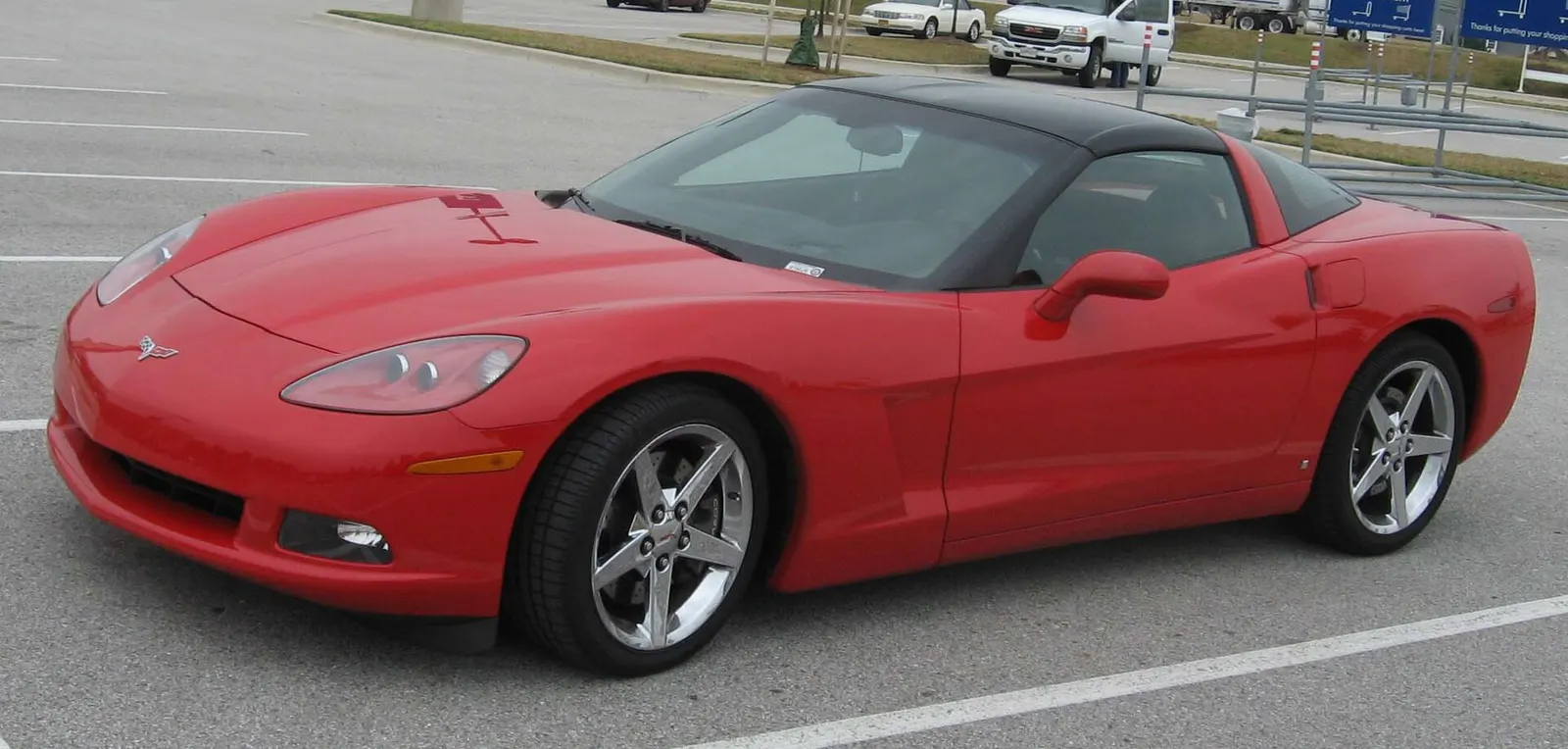
Change model, engine or transmission
Narrow it down further, or continue to see everything for this year.
Specifications
6 configurations
| Model | Body | Engine | Transmission | Horsepower | Torque (lb-ft) |
|---|---|---|---|---|---|
| Base | Convertible | LS3 6.2L V8 | 6L80 6-speed automatic (paddle shift) | 430 | 424 |
| Base | Coupe | LS3 6.2L V8 | 6L80 6-speed automatic (paddle shift) | 430 | 424 |
| Base | Convertible | LS3 6.2L V8 | TR-6060 6-speed manual | 430 | 424 |
| Base | Coupe | LS3 6.2L V8 | TR-6060 6-speed manual | 430 | 424 |
| Z06 | Coupe | LS7 7.0L V8 | TR-6060 6-speed manual | 505 | 470 |
| ZR1 | Coupe | LS9 6.2L Supercharged V8 | TR-6060 6-speed manual | 638 | 604 |
- With optional dual-mode exhaust
- 436 hp / 428 lb-ft
Sample data Commonly published figures, seeded as sample data. Verify against factory documentation. Weight, dimensions, gear ratios and capacities will be added from verified sources; until then, use the owner's manual.
Common problems
Known issues reported for the 2009 C6
The 7.0L LS7 in the 2006–2013 C6 Z06 is known among owners for valve guide wear, mainly on the exhaust side, which in some cases has led to a dropped valve and serious engine damage. The 2013 427 Convertible also uses the LS7. How common it is and what causes it are still debated, so many owners have the heads checked and decide from there.
The 2013 427 Convertible also uses the LS7.
On C5 and C6 Corvettes, the oil pressure sender commonly fails, causing the gauge to read zero, max or jump around. The engine is often fine, but you can't assume that. Always confirm with a mechanical gauge before driving.
Some C6 manual owners report the clutch pedal staying on or near the floor after high-RPM shifts, usually during spirited driving or on track. It's commonly linked to the clutch hydraulic system, with heat and aged fluid often blamed.
C4, C5 and C6 Corvettes rely on electric cooling fans. When a relay, fan motor, sensor, fuse or wiring fails, the car may overheat in traffic or with the A/C on but run fine on the highway.
The harmonic balancer (crank pulley) on C5 and C6 LS engines can develop a visible wobble. It happens when the rubber ring between the hub and outer ring breaks down, or when the balancer has moved on the crank snout, often after a previous repair or pulley swap. A wobbling balancer can throw the belt and, if it has moved, can point to a deeper crank problem.
C5, C6 and C7 Corvettes use sealed hub bearing assemblies. They wear over time, especially with wide tires, track use or impacts. A failing hub causes a hum or growl that changes with speed and cornering.
C6 doors open with electronic push-button releases instead of mechanical handles. When the battery is low or dead, the doors may not open from outside or inside with the normal buttons. Manual releases exist inside the car, and the owner's manual explains how to get in and how to reach the battery. Many owners only learn this when they're locked out.
From the C4 onward, Corvettes have many electronic modules that draw small amounts of power with the car off. Add aging batteries, aftermarket accessories, or a module that doesn't go to sleep, and the battery can go flat in days or weeks. Storage without a maintainer is the most common cause.
Maintenance
VetteBase doesn't make up maintenance intervals. Your owner's manual or the GM service schedule for your VIN is the authority, and it depends on driving conditions and, for newer cars, the oil life monitor. Classic cars (C1–C3) should follow restoration-shop guidance for their condition.
- Owner's manual: the glovebox copy, or GM's owner resources site for 1990s+ cars
- Factory service manual: for torque specs, capacities and procedures
- Your dealer or specialist: can print your car's service history by VIN
From maintenance records in member garages. This is community data, not a schedule.
No records yet.
Owner discussions
Parts that fit
Compatibility is community-maintained. Confirm fitment with the seller.
A glycol-based, high-boiling-point fluid for spirited and track driving. Confirm it meets the fluid type listed in your owner's manual before use.
High-temperature front and rear pads for HPDE use. More fade resistance than street pads, with more noise and dust when cold.
A consumer-grade ceramic coating kit for paint, wheels and trim. Paint must be fully cleaned and decontaminated first for best results.
An automatic charger and maintainer with an AGM mode and a quick-connect pigtail. Safe to leave connected for long-term storage.
Stainless long-tube headers for LS3 cars. Requires a tune. Check emissions legality in your state before installing on a street car.
A handheld programmer for loading tunes and reading codes. Gains depend on the tune and supporting mods. Check emissions legality before tuning a street car.
Builds & member cars
No member cars yet. Add yours.
Recalls
Recalls are issued per VIN, so the only reliable check is the official lookup. VetteBase doesn't keep its own recall list because an outdated one could be dangerous.
Use the U.S. NHTSA lookup for 2009 and newer VINs. Your VIN is entered on their site, never on ours.
DIY guides & buyer info
Red flags, questions for the seller, printable inspection checklist.
Why Corvettes drain batteries, what a battery maintainer does differently from a trickle charger, and how to hook one up safely.
What to check, bring and expect before your first high-performance driving event (HPDE) in a Corvette.
What brake fluid does, why it wears out, how DOT ratings differ and when Corvette owners should think about flushing it.
A step-by-step approach to inspecting a used Corvette before you buy, and when to bring in a specialist.
A plain-English tour of all eight Corvette generations, what changed between them and what each one is like to own today.
Camber, caster and toe in plain English, why Corvette alignments matter, and how street and track settings differ.