C5
1997–2004The modern foundation
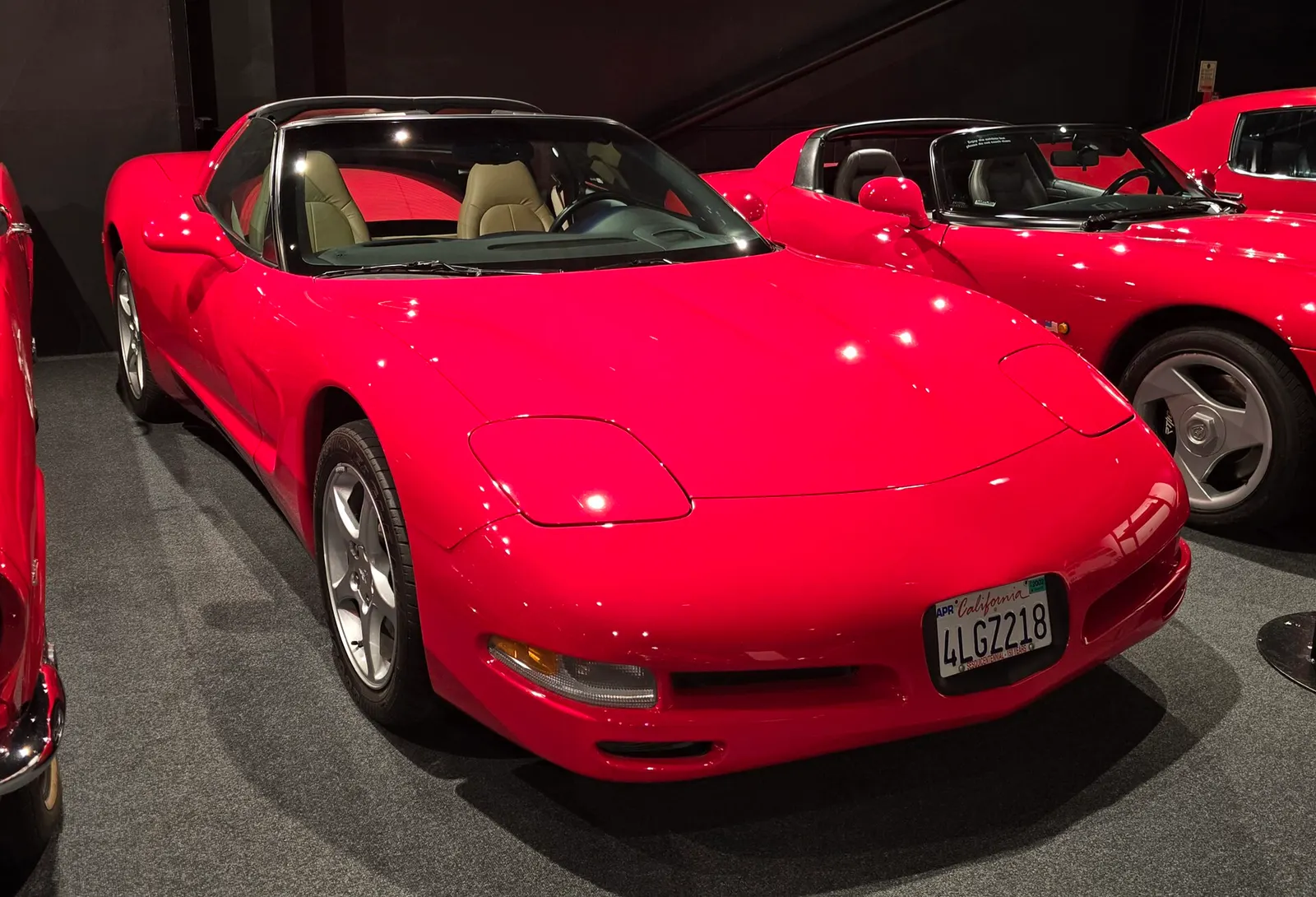
It introduced the hydroformed frame, the rear-mounted transaxle and the LS1, which started the LS engine era. Modern, comfortable and fast, the Z06 brought a lightweight fixed-roof track car. Today it's one of the best performance values anywhere.
Choose your year
Each year page shows the exact configurations, specs, issues and owners.
Models & trims
Coupe, convertible, or 1999–2000 hardtop.
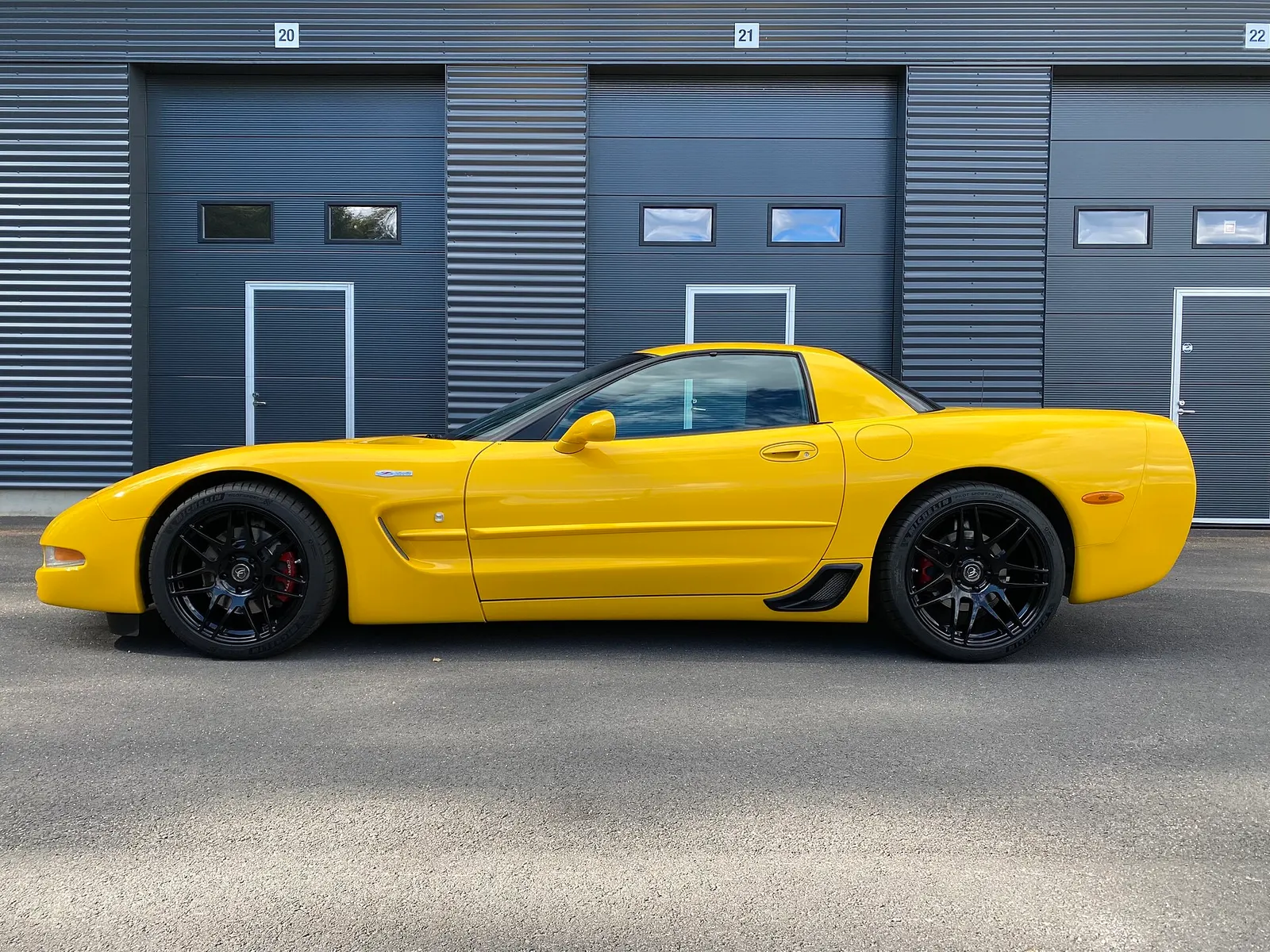
Fixed-roof hardtop with the LS6, a manual and track-focused tuning.
Engines
Sample data Published figures as commonly cited. Verify against factory documentation.
Highlights
- LS1 V8: the first LS engine
- Rear transaxle for better weight balance
- Z06 with the LS6 (2001–04)
- Huge aftermarket support
Special editions & packages
- Z51 Performance Handling Package1997–2004
Firmer springs, larger stabilizer bars and performance shocks.
- Indy Pace Car Replica1998
Purple and yellow convertible replica.
- 50th Anniversary Edition2003
Anniversary Red paint, with Magnetic Selective Ride Control debuting.
- Commemorative Edition2004
Le Mans Blue with a racing-inspired stripe (Z06 version had a carbon-fiber hood).
Common C5 problems
On C5 and C6 Corvettes, the oil pressure sender commonly fails, causing the gauge to read zero, max or jump around. The engine is often fine, but you can't assume that. Always confirm with a mechanical gauge before driving.
C4, C5 and C6 Corvettes rely on electric cooling fans. When a relay, fan motor, sensor, fuse or wiring fails, the car may overheat in traffic or with the A/C on but run fine on the highway.
The harmonic balancer (crank pulley) on C5 and C6 LS engines can develop a visible wobble. It happens when the rubber ring between the hub and outer ring breaks down, or when the balancer has moved on the crank snout, often after a previous repair or pulley swap. A wobbling balancer can throw the belt and, if it has moved, can point to a deeper crank problem.
C5, C6 and C7 Corvettes use sealed hub bearing assemblies. They wear over time, especially with wide tires, track use or impacts. A failing hub causes a hum or growl that changes with speed and cornering.
The C5 uses an electronic steering column lock. When the lock motor or its sensing fails, the Driver Information Center can show "Service Column Lock" and the car may refuse to start or keep the steering locked. It's one of the best-known C5 problems.
The C5 connects the engine to the rear transaxle with a torque tube that has a driveshaft supported by bearings in rubber mounts. With age, the rubber and bearings wear and cause rumbling, groaning or rattling, often at idle or in certain RPM ranges.
C4 and C5 Corvettes use electric motors to raise and lower the headlights. With age, the motors, their internal gears or bushings, and the control circuits wear out. A headlight may stay down, stay up, move slowly or move only on one side.
The C5 has two fuel tanks, each with its own level sender. Owners commonly report a fuel gauge that reads wrong, jumps around or shows empty with fuel in the tanks. The usual cause is worn or contaminated sender contacts.
From the C4 onward, Corvettes have many electronic modules that draw small amounts of power with the car off. Add aging batteries, aftermarket accessories, or a module that doesn't go to sleep, and the battery can go flat in days or weeks. Storage without a maintainer is the most common cause.