C3
1968–1982Coke-bottle curves
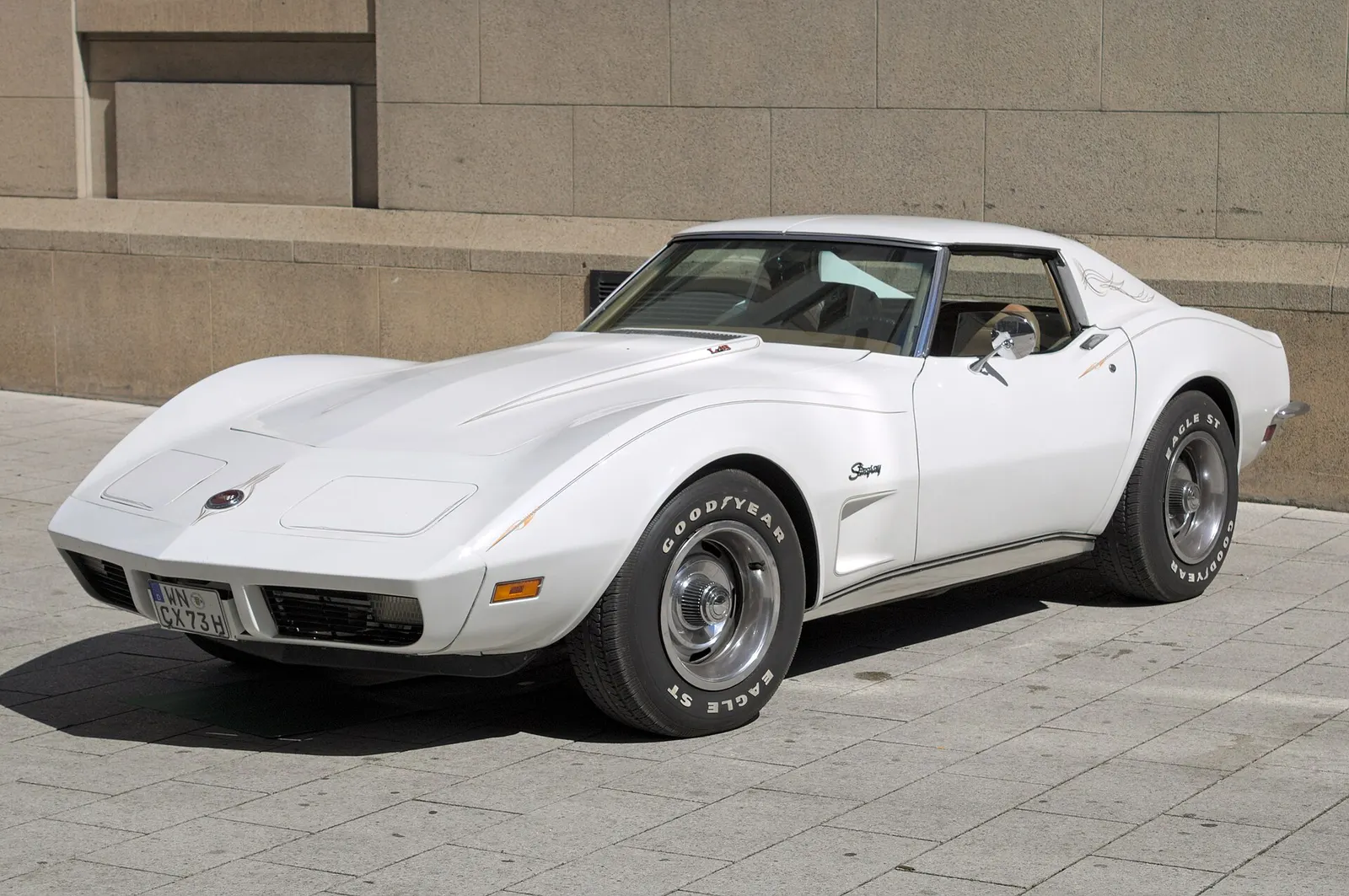
The longest-running generation, with dramatic Mako Shark-inspired styling and removable T-tops. It spans the big-block muscle era through the emissions era, ending with the 1982 Collector Edition.
Choose your year
Each year page shows the exact configurations, specs, issues and owners.
Models & trims
T-top coupe or convertible (convertible through 1975).
Engines
Sample data Published figures as commonly cited. Verify against factory documentation.
Highlights
- T-top roof panels
- Big-block 427 and 454 through 1974
- Body-color bumpers from 1973–74
- Fastback glass rear window from 1978
Special editions & packages
- ZR1 / ZR2 Special Purpose Package1970–1972
Track-focused package with the solid-lifter LT-1 (ZR1) or LS6 454 (ZR2, 1971).
- Silver Anniversary (25th)1978
Two-tone silver paint for the 25th anniversary.
- Indy 500 Pace Car Replica1978
Black-over-silver replica with special seats and decals.
- Collector Edition1982
Silver-beige paint and a lift-up rear glass hatch.
Common C3 problems
From 1965 the Corvette used four-wheel disc brakes with four-piston calipers. Over time, moisture in the brake fluid pits the caliper bores and the seals start leaking. A common fix is rebuilding the calipers with stainless steel sleeves, which resist pitting.
C1 through C3 Corvettes have tight engine bays and old cooling designs. Many run hot in traffic or on warm days, especially after decades of mineral build-up, missing seals, or mismatched parts. Most cases come down to airflow, the radiator, the fan or the ignition timing.
Under the fiberglass body, C2 and C3 Corvettes have a steel inner structure often called the "birdcage." It surrounds the cabin and windshield. Water leaks from windshield and roof seals can rust it, especially at the windshield pillars and the lower windshield frame. Repairs can be extensive because the body may need to come off.
C3 headlights (and the wiper door on early cars) open and close using engine vacuum. Cracked hoses, leaking actuators, a failing control valve or a leaking reservoir make the doors slow, stuck or droop open over time. It's a system of many small parts, so leaks are common.
Vacuum wiper door on 1968–1972 cars.